Specialist Blogs

Mme. Stella: https://stjudesfrench-stella.blogspot.com

Mr. Oliver: https://mrolivermusicclass.blogspot.com

Mr. Orr: https://tysonorr.blogspot.com

Thursday, 25 October 2018

Thursday October 25, 2018

Tremendous Thursday!!

We began the day with Math. We reviewed our homework about number patterns and then we moved onto working on our Math Review for our Patterns in Whole Numbers Unit. Our Test is on Monday. 

Next, we had French. 

After first recess and lunch we discussed the experiments that we did yesterday to gain a better understanding of air and its properties; a reminder our test is on Tuesday. Yesterday we did another experiment to confirm that air takes up space. 


We used two cups, one that went strength down and another cup that filled up with water. After, we were able to transfer the water from one glass to the other AND we were able to transfer air from one glass to the other!!! Air was able to flow/pour from one cup to the other!!! From this experiment we were able to see how air takes up space so that the water was not able to go where there were air bubbles. 

For our next experiment we put a candle in water and then flipped a cup over the candle. We saw that the water started to rise up in the cup!!! Again, from this experiment we can see that air takes up space so the water was not able to go into the cup but the fire from the candle uses up all the oxygen in the cup and therefore there was more room for the water to enter the cup and rise up. A lit candle needs to draw oxygen from the air in order to continue burning. If you limit the amount of air available, the candle's flame eventually goes out once it uses up all the oxygen. So, when the oxygen is all used up, there is now room for the water to enter into the cup. 


We did another experiment with crumpled paper and intact paper. We dropped both of them and saw that due to the larger surface area of intact paper, it took longer to fall then the crumpled-up paper. So we were able to conclude that the crumpled paper has less area for air to resist and falls to the ground before the intact paper.

We also had a conversation about air pressure and how we feel more air pressure at sea level versus up in the mountains. This is because gravity pushes the air down and when you are at sea level there is more air that is being pushed down but when you are up in the mountains there is less air and therefore lower air pressure and as a result less oxygen to breathe. 
Today our big focus was how air expands when heated. Yesterday we did an experiment to demonstrate this effect. There was a dent in a ping pong ball and then it was placed in hot water. As the air heated in the ping pong ball, the air expanded, and the dent popped out and the ping pong ball was back to normal. We also did an experiment with a plastic with a similar effect. When hot air from a hair dryer was blown on a closed plastic bag, it began to grow as the air inside of it expanded. 

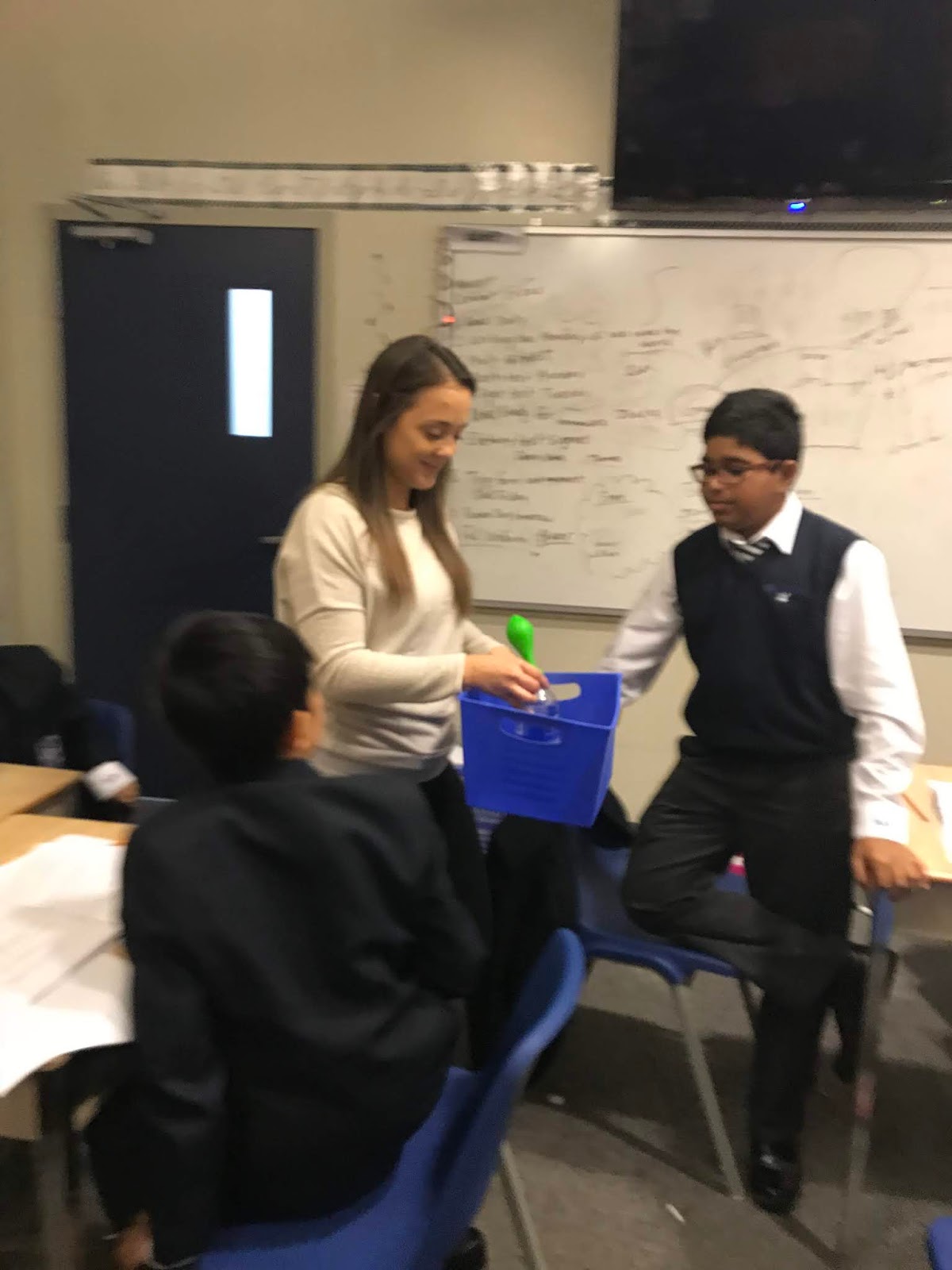
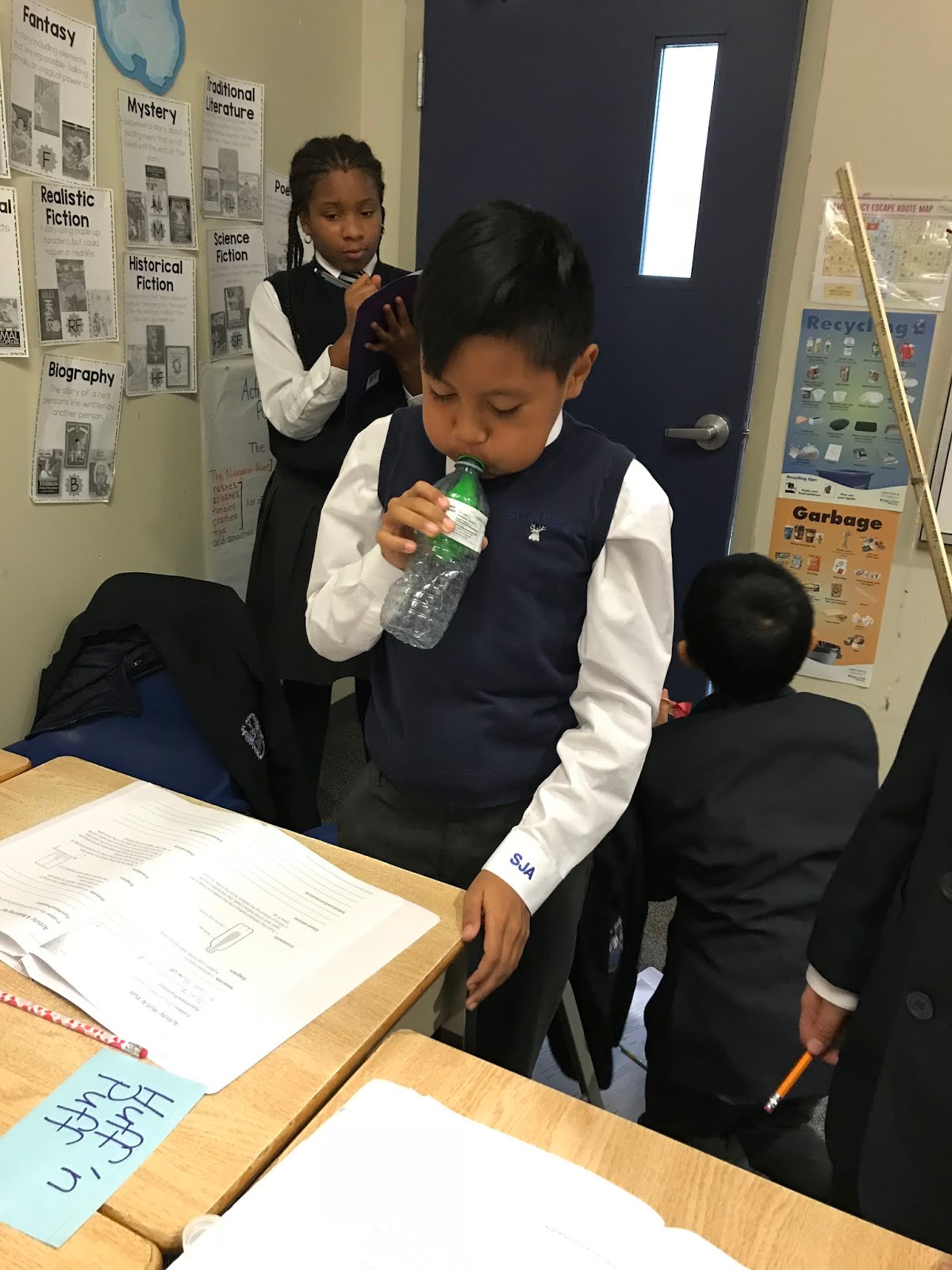
Today, we did an experiment with a balloon on a plastic bottle that was placed in hot water and then cool water. We saw that when the balloon was placed in hot water the balloon inflated!!!! We found out that is because hot air: rises, the molecules move quicker, they are more spread out and it is lighter. Then we put the bottle in cold water and we saw that the balloon deflated!! We were able to deduce that this is because cold air sinks, becomes 
denser and heavier. 


So we can apply this knowledge to hot air balloons:


We did one more experiment to explore the effects of hot air rising. An aluminum coil was hung from our ceiling that was standing still. Once Ms. Jaskolka put some candles underneath the aluminum coil, it began to spin!!!!! We were able to conclude that hot air rises and as a result, the candle heats the air under the aluminum coil. The aluminum coilbegins to turn as a result of the warm air rising and following the pattern of the coil! Very cool!!

After second recess and lunch we had physical education with Mr. Orr.

Homework:

1.    Read Daily
2.    Writing due Monday (If kids rules the world)
3.    Math Review- most of the review was completed in class (Students had an hour to work on it) – Student are asked that all pages are complete except the last page we will finish in class tomorrow 
4.    Math Test Monday
5.    Flight Test Tuesday
6.    Trip Form and payment due Friday 
7.    UOI: 3 pages

8.    UOI: Mind Map of what we have learned about air so far – This will help the students study for our test on Tuesday 

Wednesday, 24 October 2018

Wednesday October 24, 2018

Wonderful Wednesday!

We began the day with Math. We took up our homework and practiced number patterns some more. 

Then we learned about Fables and Legends. Our Ontario Writing Assessment this term is based on fable and legend writing. We first determined what is a fable and what is a legend. Then we were given two examples, and we needed to figure out if it was a fable or a legend and once we figured this out, we discussed in partners how the example used the elements of a legend or fable. Students then came up with the success criteria as to how to write a successful legend and a successful fable.

Student generated success criteria: 


Then we continued working on our Book Report for the City of Ember.

When we were finished, we picked a poem to submit for Polar Expressions.

After first recess and lunch we continued to work on our novel study or Polar Expressions entry. 

Then we had Music.

When we returned we performed more experiments to learn about the properties of air! We continued to learn how air takes up space, when air is burned then it takes up less space, air also resists things moving through it. We were also challenged and asked where we experience more air pressure: at sea level or up in the mountains. We will explore this challenge tomorrow. We also got to see how air expands when heated!!!


After second recess and lunch we reviewed our experiments from yesterday to gain a better understanding that air has mass, air takes up space, and about the strength of air pressure. 

Homework:
1.    Read Daily
2.    Math test Tuesday
3.    Air test Tuesday
4.    Trip form and payment due Friday

5.    Picture Day tomorrow 

Tuesday, 23 October 2018

Tuesday October 23, 2018

Tremendous Tuesday!

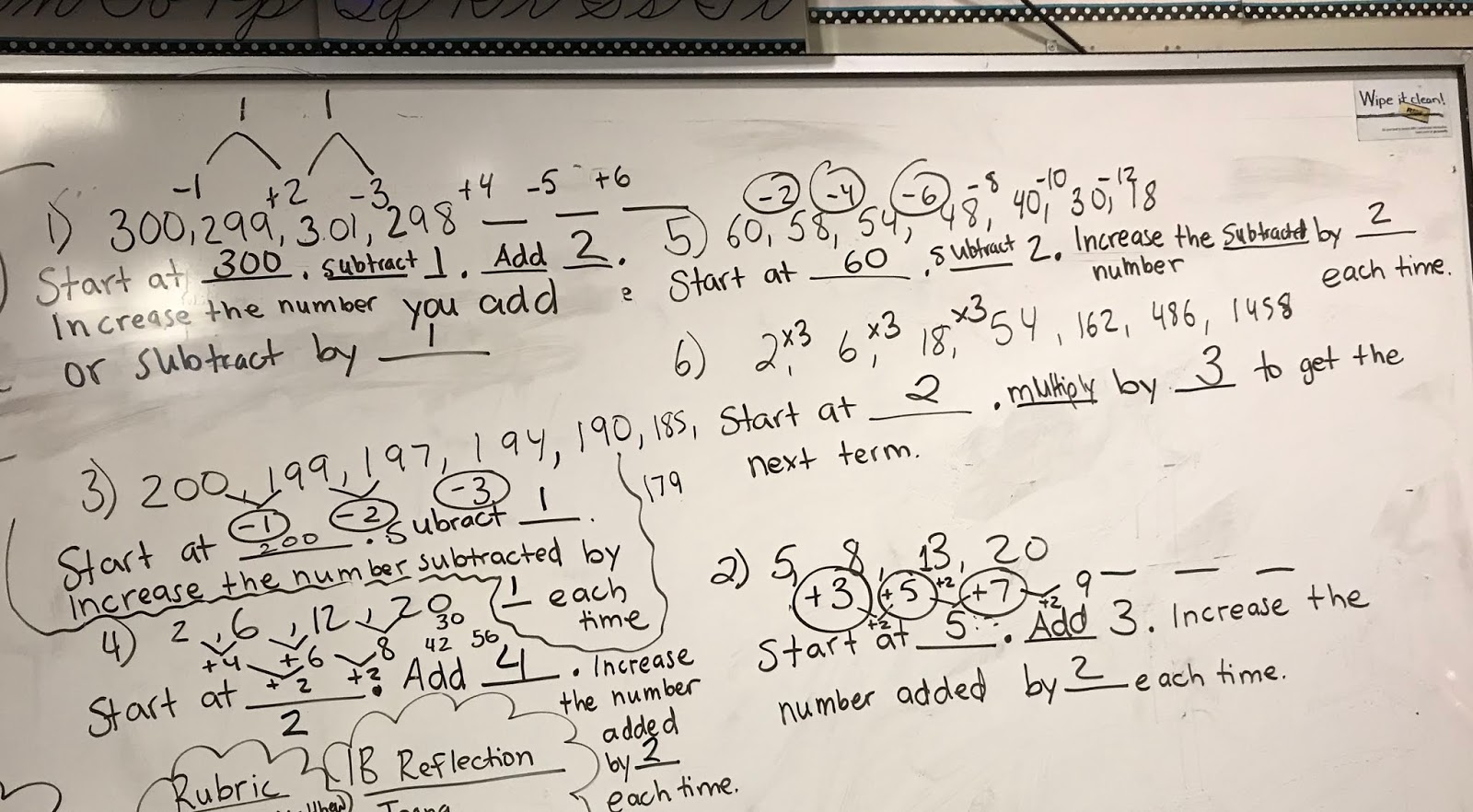
We began the day with Math. We explored number patterns today. Ms. Jaskolka gave us 6 number patterns and we needed to find the pattern rule and the next three numbers for each pattern while working in groups. 

We ensure that we begin our number pattern with the first number in our pattern. Then we need to determine if we are adding, subtracting or multiplying next. 

45, 47, 49, 51 ….

Pattern Rule: Begin at 45. Add 2 each time. The next three numbers: 53, 55, 57

We also need to be aware that when working with number patterns, sometimes we need to think critically about the number pattern. For example:

52, 53, 55, 58, 62 

Pattern Rule: Begin at 52. Add 1. Increase the number you added by 1 (since we are adding 1 to the number that we are adding by: 52+1=53 53+1+1=55 55+2+1=58 58+3+1=62) 


Next, we worked on our summary for The City of Ember.

After first recess and lunch we performed 6 experiments to learn about air. Before conducting our experiments, we reviewed the scientific method: 
The steps of PHEOCA are: Purpose, Hypothesis, Experiment, Observation, Conclusion, and Application

Fair Test: 
We also reviewed our understanding of what makes a fair test: 
You conduct a fair test by making sure that you change one factor at a time while keeping all other conditions the same.
In order for a test to be fair or scientifically sound, scientists are required to ensure only one thing (this is called a variable) is changed.
An experiment in which only one variable is changed at a time to allow a fair comparison. 
An experiment is an example of a fair test when there is only one independent variable. In a fair test, only one element is changed by the scientist while the other elements remain the same.

Variables - are the things that can change during an experiment.  Something that can vary during an experiment.

Controlled Variable - the things that you try to keep the same in an experiment or investigation.
In simple words, a controlled variable is something in a given experiment that can be fixed or would not be changed at all during the course of the experiment. 
A controlled variable is the element or feature that cannot be changed during the course of an experiment. The controlled variable is kept constant so the changes in other variables can be observed more easily

Independent variable:An independent variable is one that is changed by the scientist in order to facilitate an action or reaction within the given experiment.

Dependent variable: 
The dependent variable is the one that changes as a result of the independent variable. The dependent variable is what gets measured during an experiment and what is affected by the other elements in the experiment.

We did an example as a class to better understand these scientific terms. 

First, we would come up with a problem: How much water does a plant need to grow?

Then we would make our hypothesis.

Next, we would perform our experiment. We determined that the controlled variables would be: the soil, seed, container, and amount of sun we gave each plant (these variables do not change).

The independent variable would be how much we water each plant.

The dependent variable would be how tall the plant grows. So how tall the plant grows is dependent how much it is watered.  

Through our experimentation today we learned about the strength of air pressure, that air takes up space, and that air has mass (this was shocking to many of us!!!). 


After second recess and lunch we had physical education with Mr. Orr.

Homework:
1.    Read Daily
2.    Finish summary
3.    Math – Questions 1, 2 and 3
4.    Math test Monday
5.    Flight test Tuesday

6.    Writing due Monday (if kids ruled the world)